
Imagine an era predating recorded time, where landscapes were wild and darkness was reigned by fear. You are on your way home from a full day of hunting, the weight of a deer on your shoulders slowing your paces down. It was a cruel day, filled with elusive game, and a long grueling chase led you away from the local forest.
A downpour catches you by surprise. The mountain valley offers you no shelter, with barren trees and low brush. 20 paces to your right you suddenly see a cave entrance. Any delay in your travels home can result in sleeping among foreign territory. But it is a choice between life, or death by hypothermia.
Hovering in the entrance, the warm air emitting from deep inside starts to dry you off as you gaze in anticipation of the downpour’s conclusion. The runoff from the mountain above you begins to trickle down the entrance. The water appears brown and muddy, splashing down with small sandy particles.
The rain continues and doesn’t cease. You shut your eyes for a brief moment and don’t open them for longer than anticipated. What was once dripping over the caves entrance was now a steady stream flowing around the edges. Water is also dripping around you through the ceiling; you turn to look at the cave and—square with your gaze are two round eyes set on a massive hairy head!
You jump in surprise and shout to ward the creature off, but instead it flinches and takes two steps closer, growling. Set on four legs, its clawed paws are twice the size of your hands. It front hunches peak over the arched back, and hunched between is the glooming gaze, mouth open to reveal a growl surrounded by a full set of large teeth.
Before either of you could make a move, part of the ceiling collapses. Water gushes and splashes around you, knocking you to the ground in a pile of mud. You scramble to your feet and dash for the entrance, all thoughts of your prized deer and warm home banished by survival and desperation.
The creature is nowhere to be seen, scared deep in the cave or buried by it. Where the cave entrance used to be is now a mudslide. You quickly scramble away from the stream and head for home, soaked, dirty, and hungry…but alive.
Before Turkish Ottomans, Roman Emperors, and tribal Dacians, the Carpathian Mountains were home to prehistoric mammals, including the Cave Bear (Ursus Spealeus). Averaging 700kg / 1,550lbs, the same size of a Kodiac Bear (Alaska), these extinct animals lived across Europe and Aisia (primarily Russia), dwelling in caves for generations.
Today, Bear’s Cave is one of the largest trove of Ursus Spealeus remains in the world. In addition to a plethora of world class Speleothems, Romania’s prehistoric cave tells the story of a world long before recorded time.
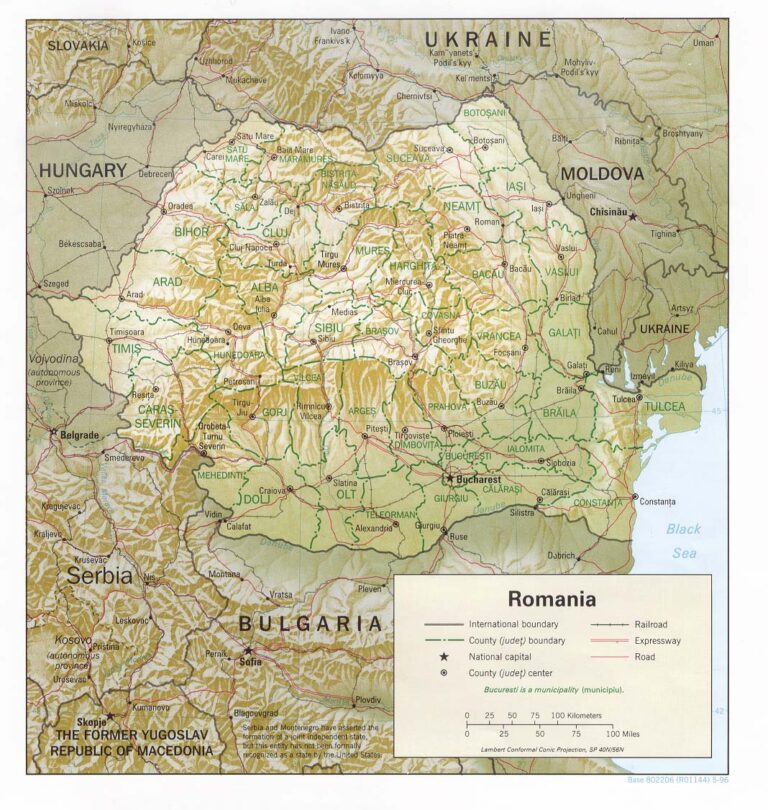
Bear’s Cave is nestled in the West Carpathians among the Apuseni Mountains in Romania’s Bihor county (judet). It is a limestone cave made during the Tithonian period of the Jurassic Epoch.
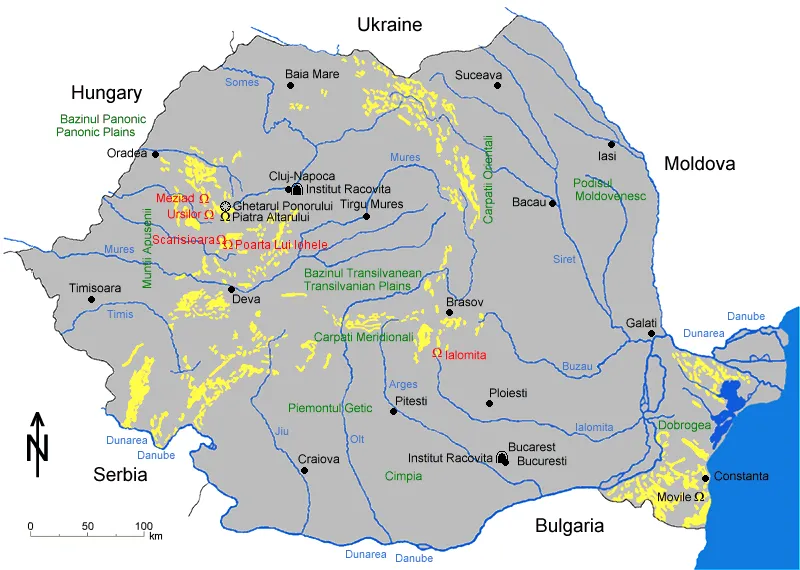
Map of Romanian Caves by Showcaves.com
The cave includes two main levels, with entrances exclusive to the upper level. A river runs southbound from the lower level and drops further underground below the upper level. One suggested theory of genesis is by Cajus G. Diedrich, who charts the timeline below:
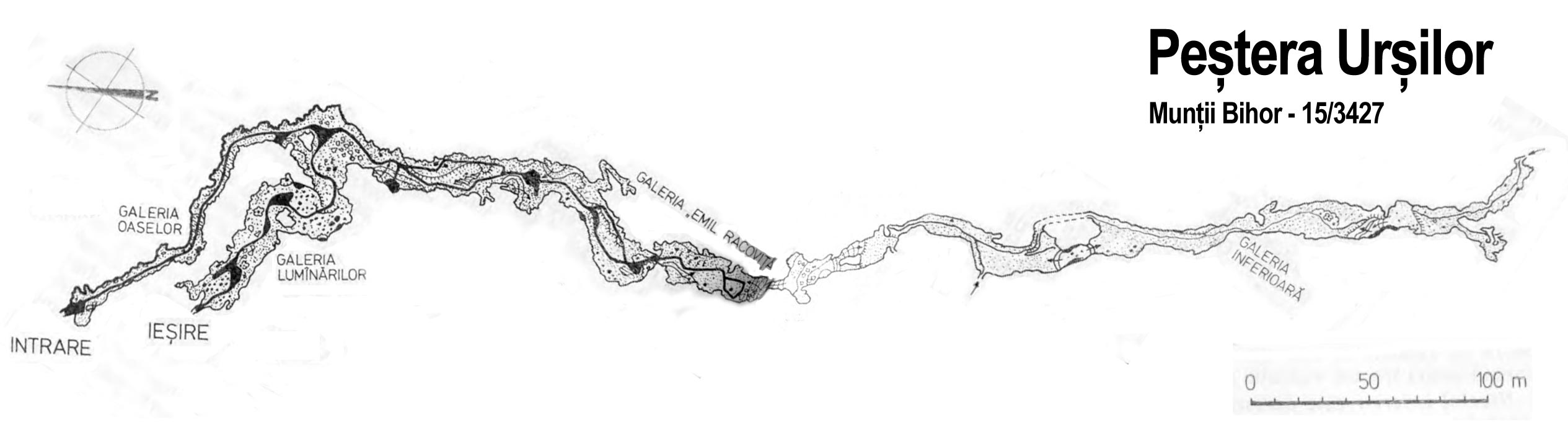
“Cave Map” by Speologie.org
The large amount of humidity due to the collapsed entrance and flowing stream has preserved remarkable impressions of fur and claw marks in the floor and walls.
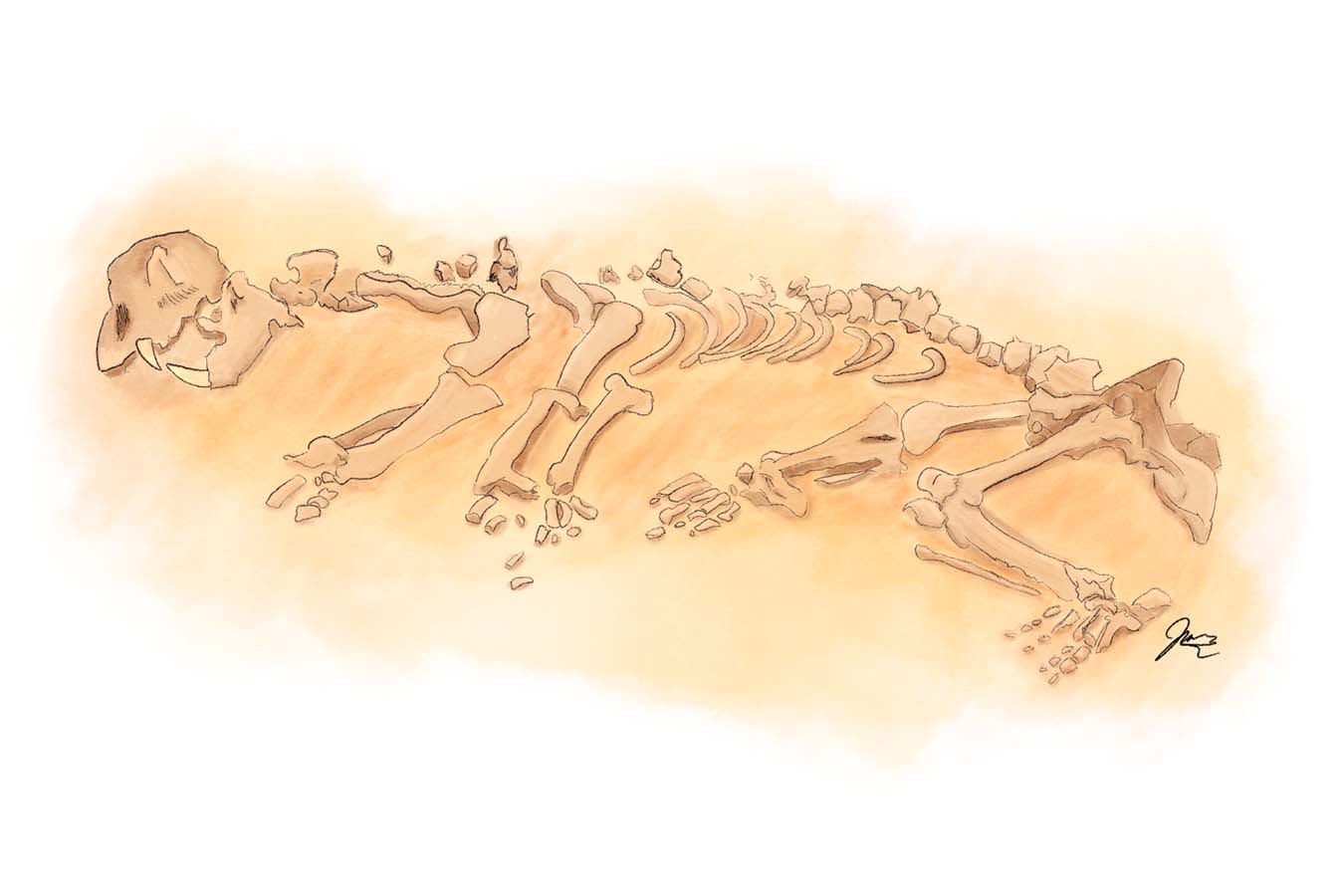
© Jonathan Merry. All rights reserved. Submit request for use
The vast amount of cave bear remains throughout various sedimentary eras strongly suggests the cave was home to a multi-generational mammalian family.
While majority of the fossils appear to be developed due to pitfalls, drowning, or starvation, there are still examples of nest beds excluding traumatic signs of death.
It is believed that the collapse of the entrance trapped several dozen bears inside, leading to speculation over one interesting discovery of a femur bone lodged inside another bear’s mouth. The omnivoric diet is criticized because the skulls recovered for the species reveal large smooth molars suitable for vegetation only…perhaps it was the last meal of desperation?
In 1975, Traian Curta was working at a marble quarry when he noticed a hole in the ground. A blast just occurred for extraction of the rock for harvesting and selling off to the global market. Upon further inspection, he unearths a large bear skull from the dirt. He and his fellow coworkers, who have never seen a bear skull at this magnitude, believe it to be the skull of a dragon.
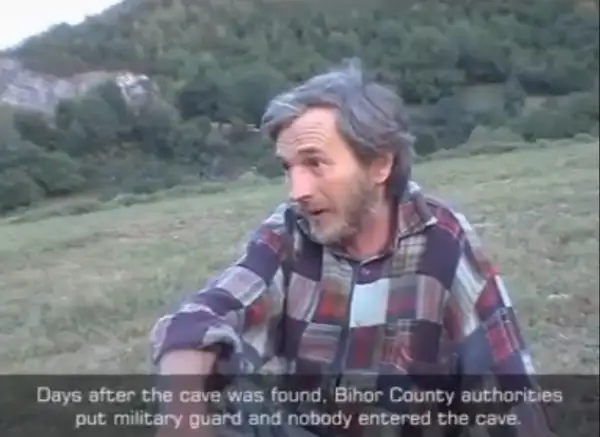
Watch a 2004 documentary about the discovery of Bears Cave and the people who saved it from destruction.
Unfortunately, the excitement is short lived. Since the cave was found on company property, the owners are not interested in halting production, and plan on blowing up the cliff side for further extraction. Traian and several other residents reach out to the tourism office to try and request governmental protection. At first, the office is reluctant. Marble exportation drives a large portion of revenue for Bihor County. To encroach on the quarry could lead to financial repercussions.
But just as sudden as the discovery, the board changed their mind. On the day of demolition, after nearly 20 holes were drilled for dynamite, the driver who left to fetch the dynamite was pulled over on the side of the road, saving the cave from destruction.
The first exploration into the cave was by the Speleologist group Speodava, and then a joint excursion consisting of E. Racoviță (Institute of Speleology) and Țării Crișurilor Museum (Oradea, RO) who wrote the first publication. Subsequent restoration efforts led to the upper-level opening in 1980 to the public. The lower level, actively flooded, is accessible only by a large drop deeper into the cave and is restricted only to researchers.
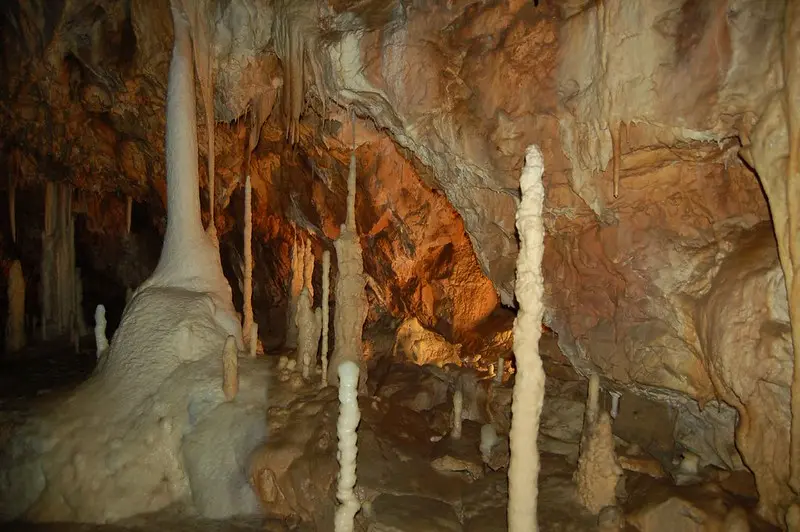
“Pestera Ursilor” by Pop Paul
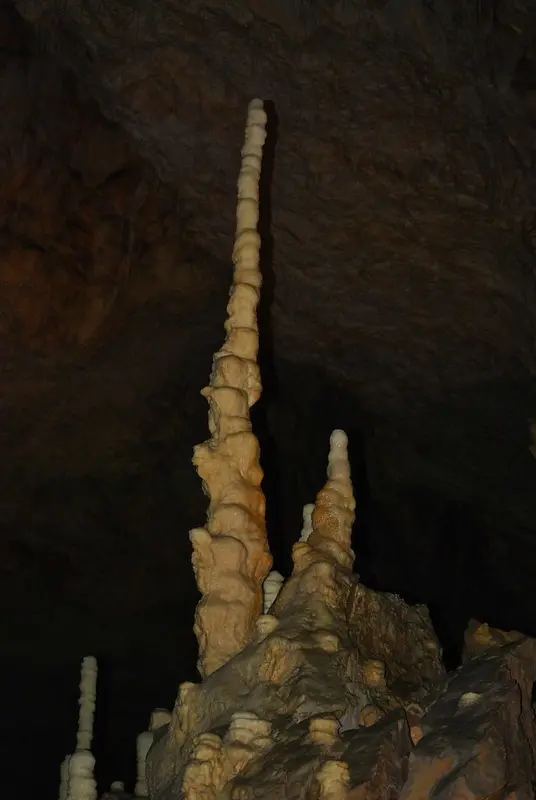
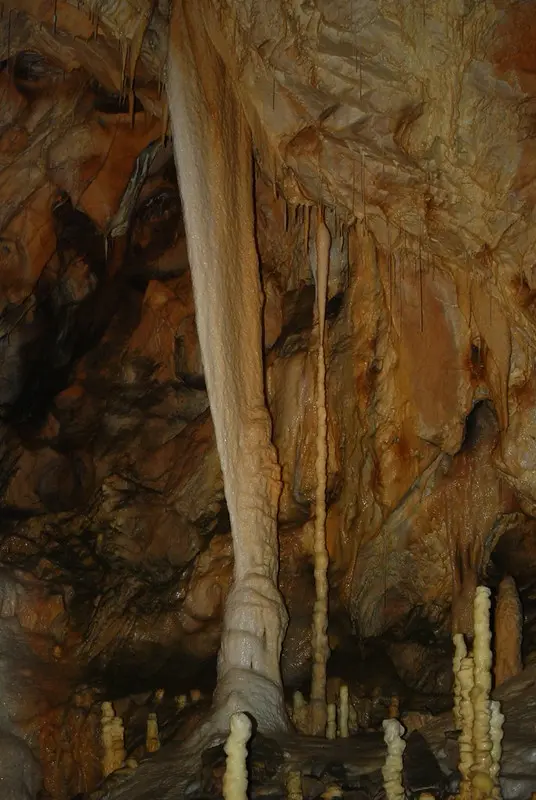
Among four primary galleries (Oaselor, Lumânărilor, Emil Rakovită , Inferiorară) are hundreds of cave bear remains, including two cave lions and a hyaena. But the greatest visual display is the Holocene speleothems, numerous and majestic splayed across the floor and ceiling.
Stalagmites emerge from the floor, seeming to grow as saplings. Directly above, their counterpart stalactites are miniscule in comparison. Speleothems are found across all four galleries in vast amounts, exemplifying the porous nature of the cave’s integrity during its formation.
Before legends and myths were born in the Carpathians, Peștera Urșilor tells a story of wonder, prehistoric adventure, and lost tales discovered anew. Through natural process, corporate domination, and scientific discovery, Bear’s Cave is preserved for the next generation keen on learning about this beautiful world we live in, and the sacrifices one must take to protect it.
Constantin, Silviu, et al. “Reconstructing the Evolution of Cave Systems as a Key to Understanding the Taphonomy of Fossil Accumulations: The Case of Urşilor Cave (Western Carpathians, Romania).” Quaternary International, vol. 339-340, Elsevier BV, Nov. 2013, pp. 25–40.
Diedrich, Cajus G. 2011. “An Overview of the Ichnological and Ethological Studies in the Cave Bear Den in Urşilor Cave (Western Carpathians, Romania).” Ichnos 18 (1): 9–26. doi:10.1080/10420940.2011.552578.
Diedrich, Cajus G. “Cave Bear Killers and Scavengers from the Last Ice Age of Central Europe: Feeding Specializations in Response to the Absence of Mammoth Steppe Fauna from Mountainous Regions.” Quaternary International, vol. 255, Mar. 2012, pp. 59–78.
Terzea, Elena. 1978 “Dépôt de remplissage et Mammifères quaternaires de,
« Pe~tera Ur~ilor » de Chi~cau, département de Bihor.” Travaux de l’Institut de Spéologie “Émile Racovitza,” vol. 17, pp, 139-144.
Dragomir, Lavinia. “Traian Curta, Primul Om Care a Călcat În Peștera Urșilor După 15.000 de Ani | AUDIO.” Europa FM, 16 June 2022.
Speleothem || Showcaves.com
Cave Homepage || Pesteraursilor.ro