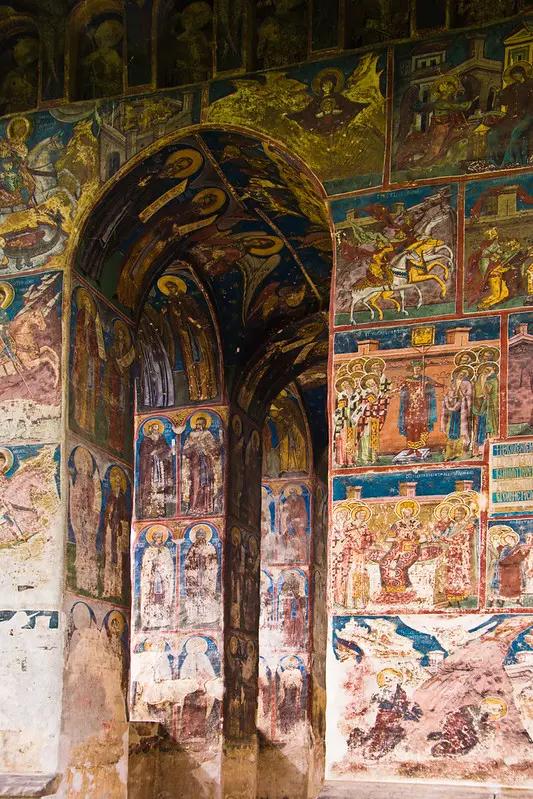
Tucked away in the Carpathian Mountains lies Humor Monastery, a church completely covered in frescos rich with church history. As a westerner who stereotypically has little knowledge of Eastern Europe, I am continually amazed at the unique case studies of traditional architecture, culture, and history found within this little known corner of the earth. Here, history is situated on the fringes of Catholicism and Eastern Orthodoxy, Ottoman emperors and Christian crusaders, Roman generals and “barbarous tribes” (simply stating a cliché for context my dear Romanian readers, no insinuation from my end). Modern day Romania is the place where empires collided and cultures intermingled. Buildings and paintings became the melting pot for various techniques from both west and east creating a style seen only in this area.
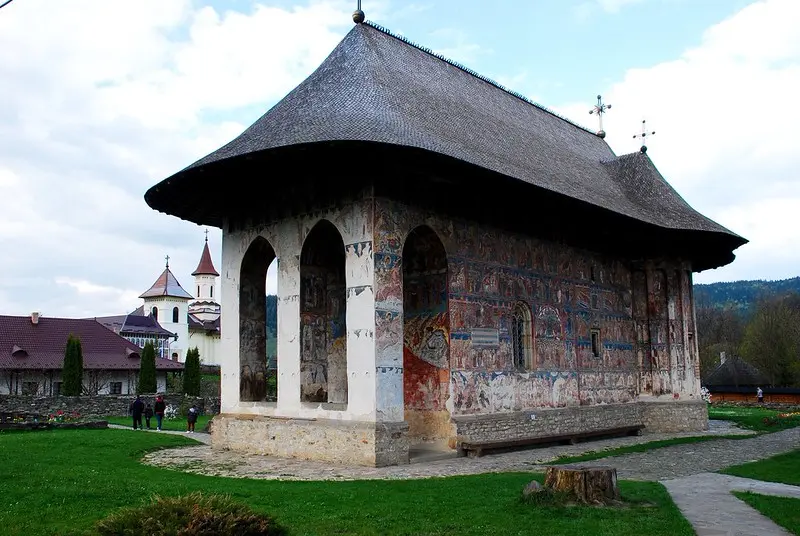
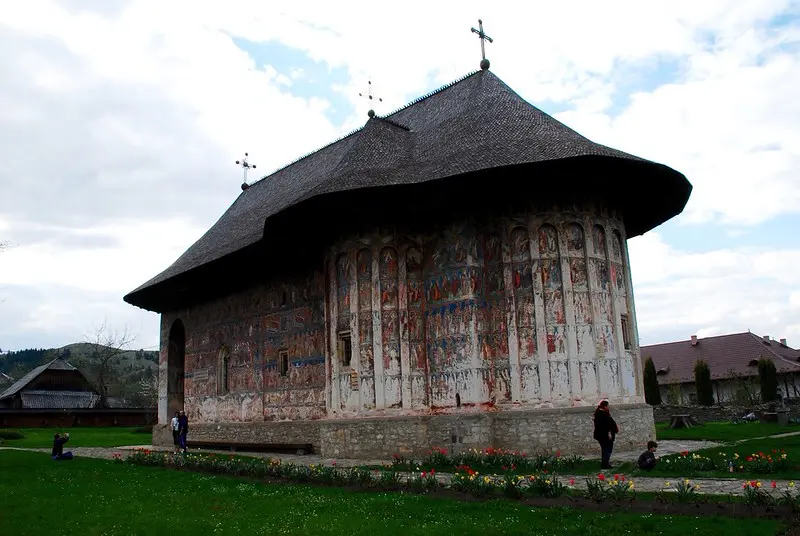
The name Humor Monastery (Mănăstirea Humor) comes from the nearby river, which means “fast water.” The earliest record confirming the monastery’s existence derives from the 15th century, and achieves recognition as the birthplace of the well-preserved Four Gospels of Humor written by Nicodim from Putna.
The church of the Assumption of the Holy Virgin began construction in 1530 after the original church was destroyed for unknown reasons (Intentional/unintentional fire? Or foriegn invaders? My assumption lies on the latter). It was built during the reign of Petru Rares of Moldovia, who is credited for preserving many of the regional churches through his royal degrees for restoration.
For the next 200 years, Humor would survive civil wars and raiding Ottomans, sustaining minimal damage. But it wasn’t until the 18th century when the ruling Austrian Empire decommissioned the monastery, that the church was neglected and left to decay for nearly 300 years.
After WWII, restoration attempts were made during the nationalist period of Romania beginning in the 1960’s. In 1993, Humor Monastery alongside several other churches were granted entry into UNESCO, certifying its continued protection as a reminder of both the Romanians and Moldavians resistance and commitment to God and country.
In 1641, one of the princes vying for Moldavian rule secured Humor as his domain by constructing fortifications around the monastery. Remains of these fortifications seen today include the watch tower in the northeast corner. The Church is the only other structure remaining and will be the focal point of this section.
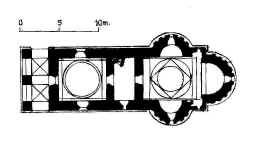
The church of the Assumption of the Holy Virgin is built in the Moldovan style (a subset of byzantine architecture) as a triconch church. This is defined by a centralized floor plan in the form of a trefoil, or three conches (apses)–including the exedra–attached on three sides of the central core of the structure. It is believed this church to be the first iteration of an open exonarthex instead of the usual closed entryway (see Patrauti Church). Moldovian churches built afterwards (Moldovița Monastery) began to imitate this technique, symbolic of the desire to make the church more accessible (and less intimidating) to the community.
Another unique feature is the hidden room inside the tomb chamber, used to protect the many relics from frequent invaders (see History).
A steeple, or bell tower, is absent from an orthodox church if the church was commissioned by a nobleman, and not a Moldovian ruler. This is the case in Humor Monastery.
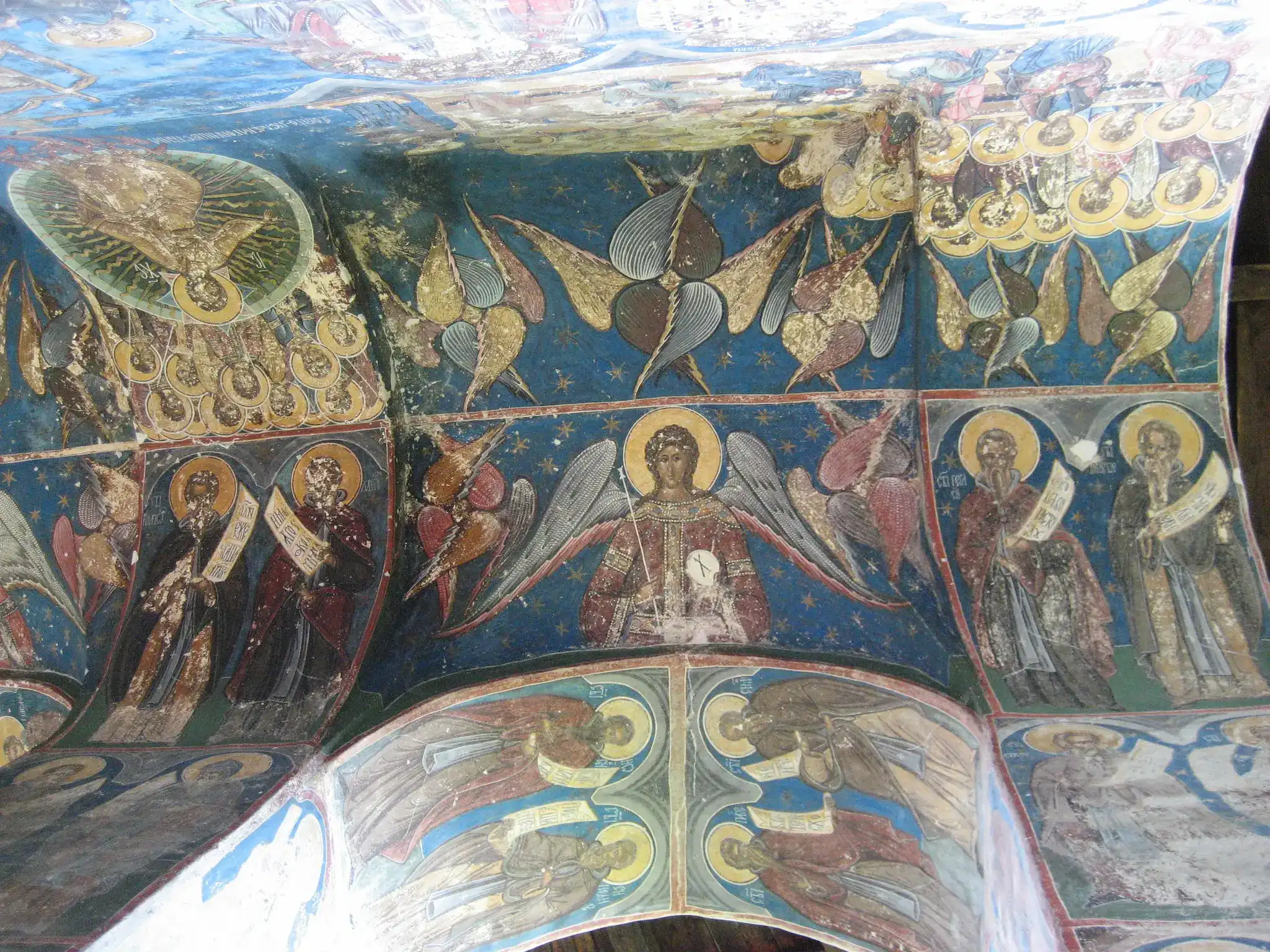
The most notable features of the church—and it peculiarity–are the byzantine frescos. Biblical and historic scenes cover the walls inside and out, revealing the regions rich Christian lore. The overseeing artist was Toma Zugravu (lit. Thomas the painter of Suceava), possibly the court painter for Peter Rares. Through various storytelling technique, scenes are told through a series of frescos akin to a modern comic strip. Examples include the Annunciation of the Virgin Mary, and the Life of St. Nicholas.
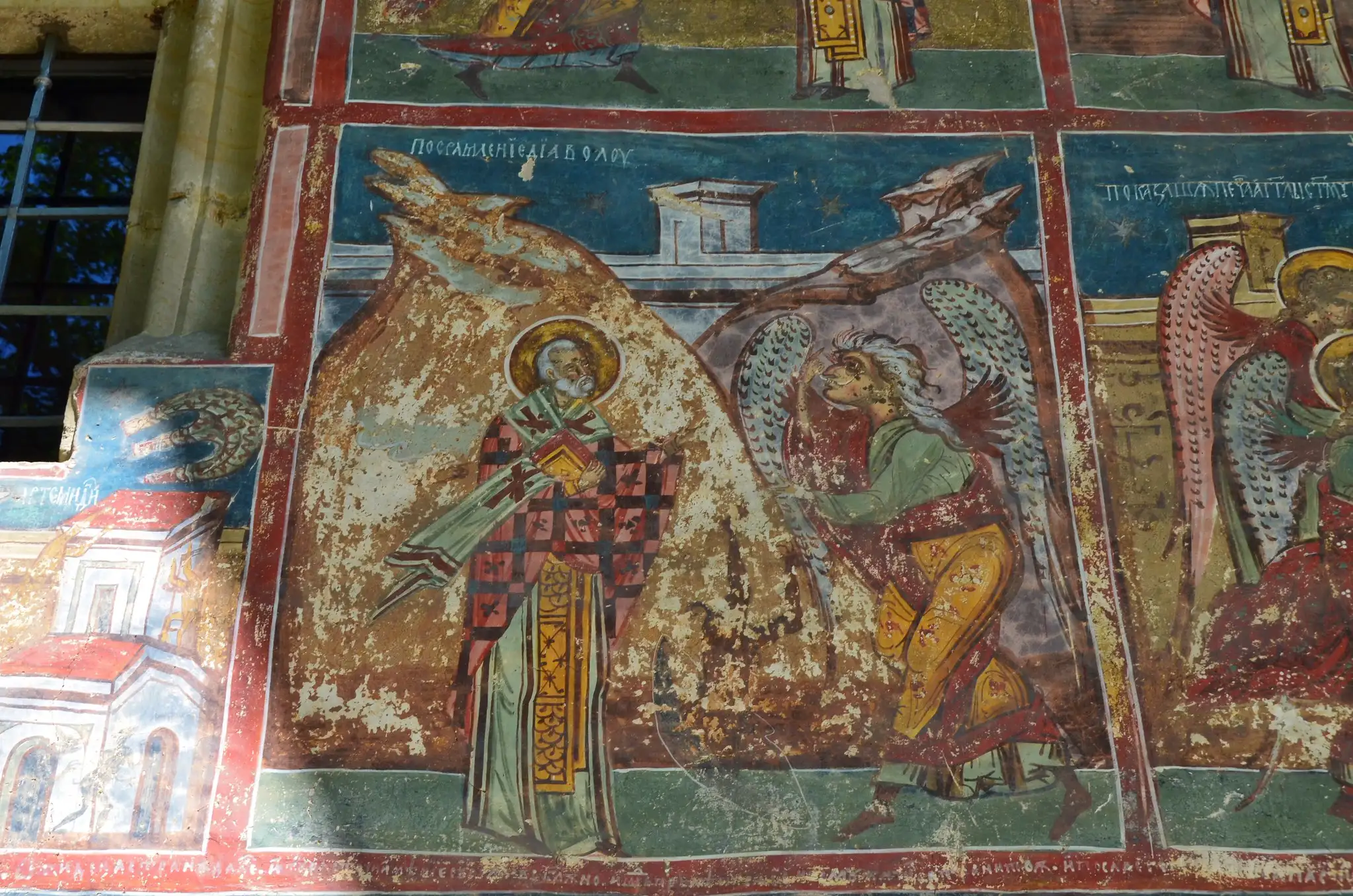
A notable feature includes Lucifer (Satan) depicted as a woman in several scenes, including his (or her in this case!) temptation of St. Nicholas. I wonder if this relates to the large demographic of witches in the region?
Other frescos include grand historic scenes, such as the Last Judgment, or the Siege of Constantinople.
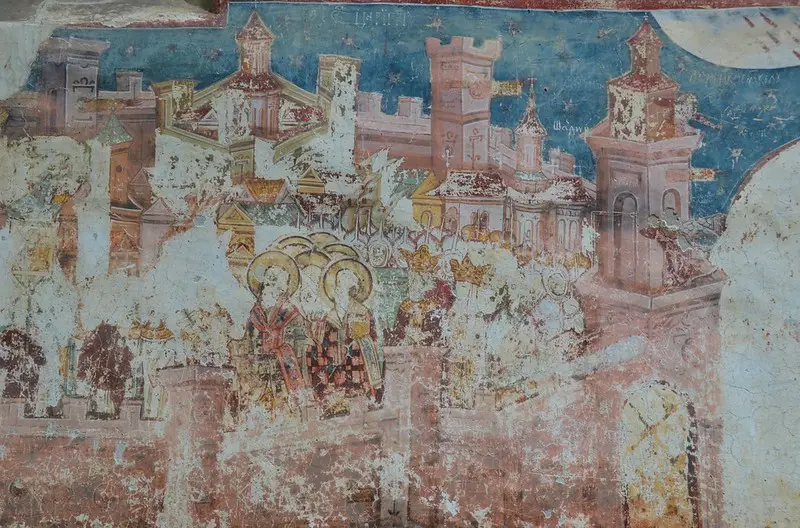
The golden crows are the emperor and empress
Men with halos are bishops and deacons.
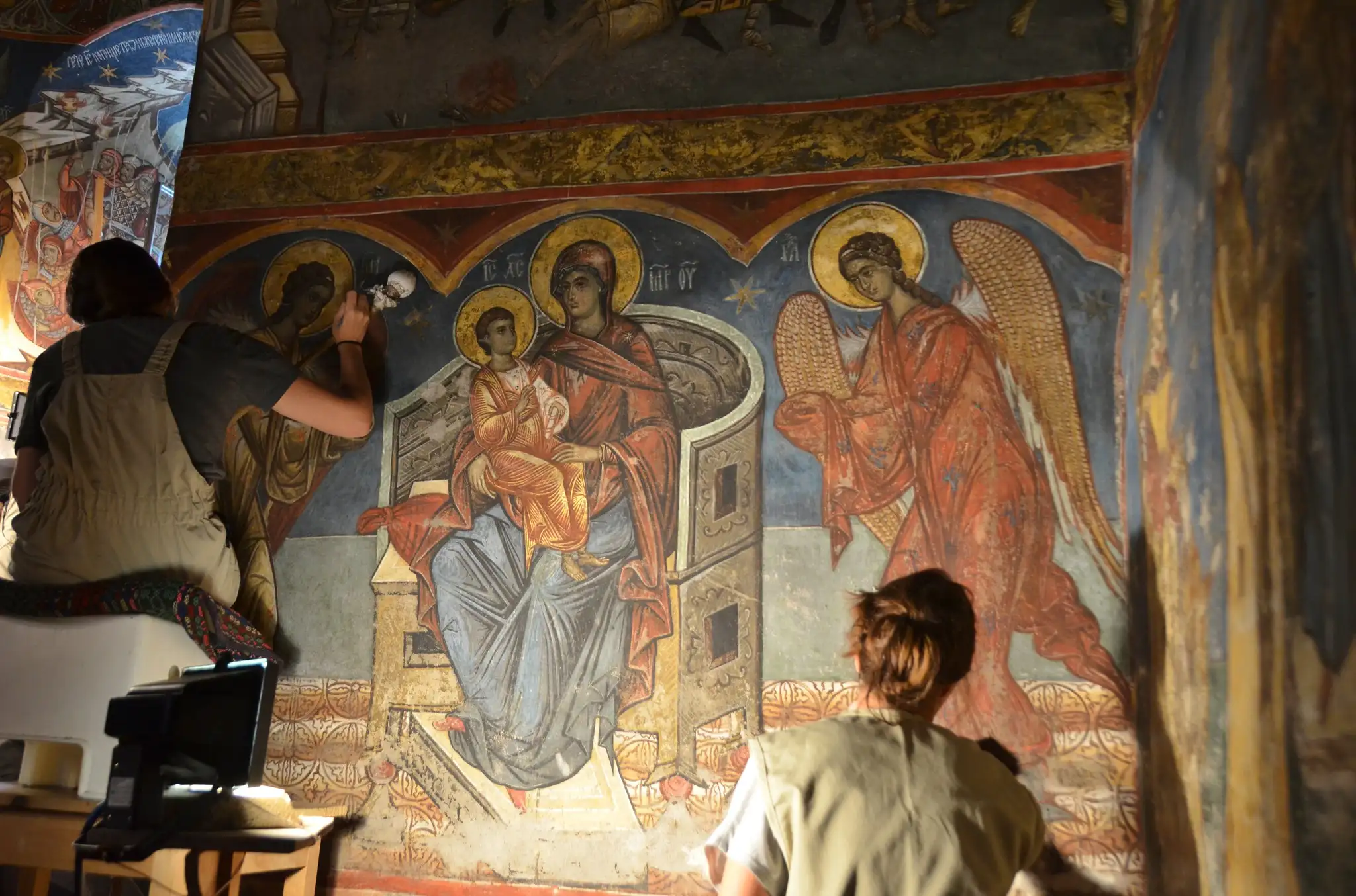
Notable relics include a Hodegetria icon
(image of Mary and child Jesus),
Mary's maphorion, Christ's cross, and a Tetraevangelion.
Romania proudly protects its humble jewels of history only for those who seek it. Today, Humor Monastery is home to a small number of nuns who care for the grounds and lead calls to prayer for visiting tourists. Their lives are living examples of the medieval and cultural traditions of orthodox Moldovians in the Carpathian Mountains. For even the smallest of reasons, this church would be a great pilgrimage for students of byzantine painting, with more than enough source material to study, rain and shine!
Visions of Byzantium: "The Siege of Constantinople" in Sixteenth-Century Moldavia

A Less Studied Hagiographical Cycle of Moldavian Exterior Painting: The Life of Saint Pachomius the Great (French: another reason to learn this language!)