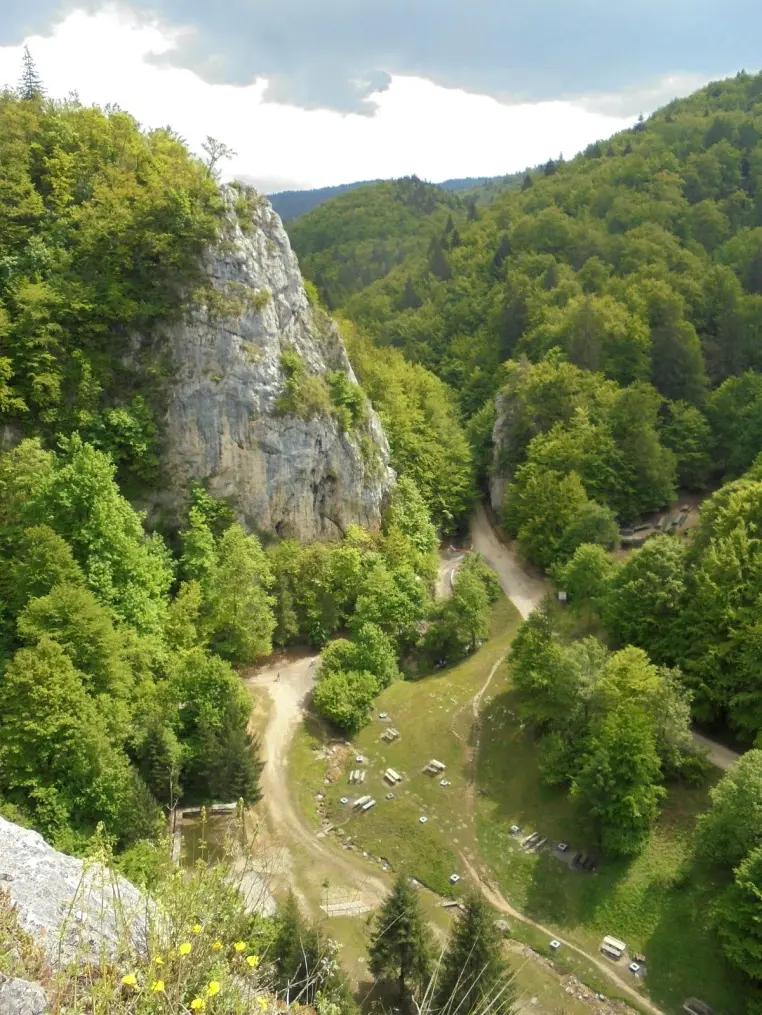
You are sitting at a picnic table, eating lunch. A family at a nearby bench cooks food over a grill, wispy billows float past you with sizzling scents of sausages. Less than a dozen feet away, a stone column rises up nearly 100 feet, crumbling ledges overgrown with abundant vegetation remind you of an abandoned castle, perhaps a lookout tower by the shape of the formation…
100 feet above you to the east rides a horseman, his hands clenched with fear. His cloak flaps wildly behind as he urges his horse on with naught but hollow promises of safety, for behind him pursues the victorious army, bent on claiming their prize captive. Every now and then his hood reveals glints of jewels set in golden metal, evidence of his royal lineage. It is meaningless to conceal the crown, for he is the only survivor of the defeated army, racing away from certain torture and death.
Below, the dense foliage and chatter of fellow picnic-goers conceal all sounds of the oncoming pursuit. Beside you, the rippling creek glides over small stones and rocks, generating a soothing white noise for your peaceful summer afternoon.
Ahead of the rider is a chasm, a rocky edge with a sudden drop to the valley floor below. His escape route leads him towards the apex of the mountain peninsula. Beyond all hope, and amid full resolution of death, he realizes that to cross over the valley to the outcropping on the opposite site is futile. The valley, though small, is too wide to conquer. Nevertheless, kings are the icons of courage and honor, and this king would rather die a brave death than become a trophy in the hands of his enemies. Though the Reapers grasp slowly clenches down, and the thunderous thumping of the pursuing horsemen slowly fade to a distant hum, our brave king gallops into the darkness, and pulls back sharply on the reins.
But suddenly, the darkness fades away. The clamorous hum of pursuit hoofbeats cease and is replaced by the rushing wind past the king’s ears. The king is shocked, not by the sudden fall into death’s arms, but by his apparent position across the valley! For lo and behold, our brave king, through divine intervention, was guided across on wings of glory to safety. His enemies, pagans who loathe and destroyed God’s chosen people, lie defeated in the valley below. Their greed overpowered the environmental awareness of the valley before them and failed to halter their steeds from destruction.
But down in the valley, not a yell or a scream from falling soldiers pierce the air around you. To your left, hikers head up the pathways into the mountains as you finish your meal. On your right, children throw rocks and sticks into the stream, giggling and splashing. While in the same place, your story occurs over 1,000 years after our protagonist. The king may not be present during your visit, but his legend lives on among the stones above you. For his name is King Solomon of Hungary, descendent from the Dynasty of the powerful Árpád; and this is Solomon’s Rocks.
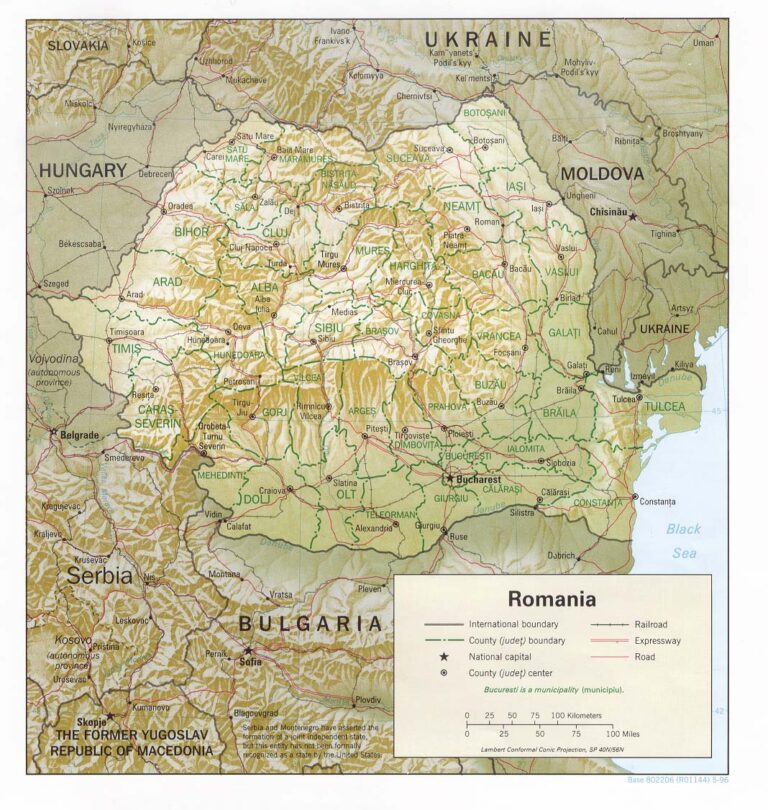
Solomon’s Rocks are located in the northern foothills of the South Carpathian Mountains outside of Brasov, Romania. The hiking area includes a small valley with picnic tables and stoves, a small creek running through the center, and the nexus of many hiking routes that lead up into the mountains.
For parking and bus drop-off, a single road leads south from the historic district of Șcheii Brașovului (aka. Șchei).
Notable destinations nearby Solomon’s Rocks and the Brasov județe include the Black Church (Biserica Neagră), Bran Castle (Castelul Bran), Bucegi Sphynx (Sfinxul din Bucegi), and Peleș Castle (Castelul Peleș).
Little known destinations within Solomon’s Rocks include a historic route of mills and Christian crosses relating to the city’s pre-20th century history. For outdoor enthusiasts, there are several rock-climbing routes (top rope and trad) scattered throughout the Rocks. Use Mountain Project or theCrag to plan out an itinerary.
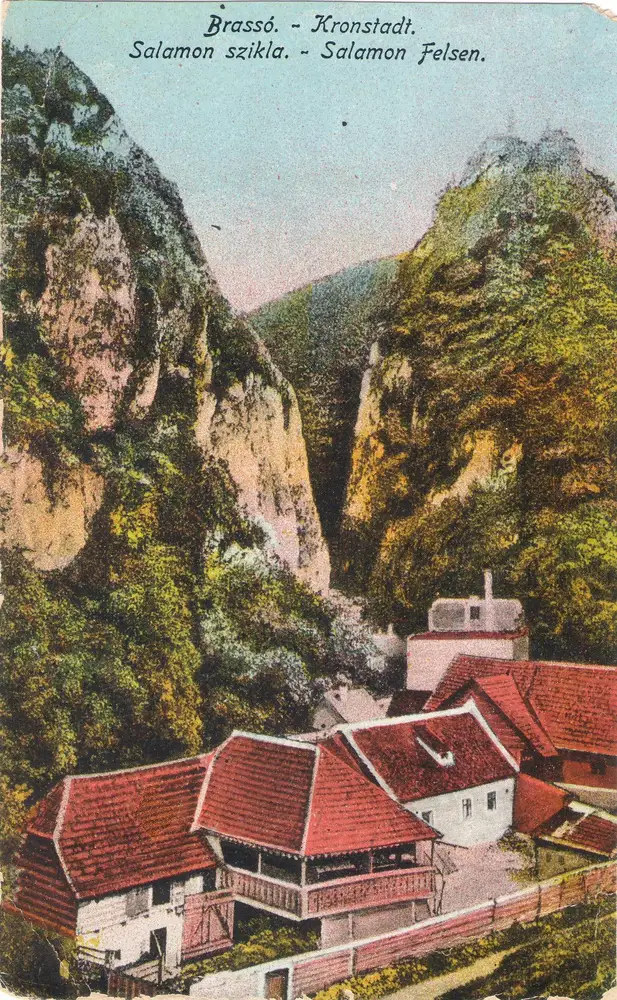
“1917 Postcard of Solomon;s Rocks” by Orasul Memorabil
While I took dramatic liberty in the realm of historical fiction, the legend of Hungarian King Solomon is one of many folk lores included in Transylvania. There are multiple iterations of the legend, according to who and where you ask. The most popular story being the one I told above.
This miraculous event was seen as a painting on one of the abandoned structures in the valley. Sadly, neglect led to this treasured relic collapsing in October 2025.
However, a different retelling aligns closely with the darker magic of witches and vampires this land is well known for.
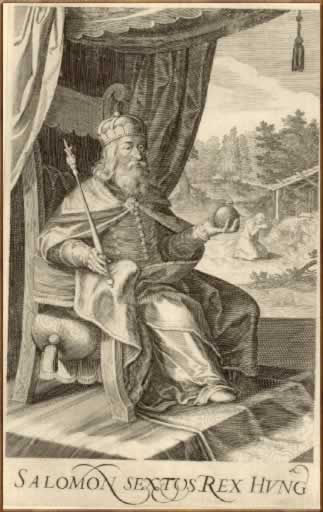
Sextus Rex Hung (Sixth King of Hungary)
According to this legend, it is said during the 11th century, King Solomon was cursed for killing his brother in an attempted coup for the throne. Seeking a mage in the Transylvannian plateau, fate suddenly turned against him and caused his horse to stumble. Falling from the saddle, the ground suddenly trembled and tore asunder below him, creating the valley we see today. With his last bit of strength, Solomon sets his crown at the base of a nearby tree, the final act of repentance for his terrible deed.
This alternate legend is notably the favorite of Brasov, as the cities emblem depicts Solomon’s crown growing roots beneath it.
Before the legend, older tribes and kingdoms lived and thrived in the mountains. During the final B.C. centuries, the Dacian tribes lived throughout present day Romania, and are well known for their brave resistance to Roman conquest for hundreds of years, until their defeat and assimilation by Emperior Trajan in the First Century A.D.
Cetatea de la Pietrele lui Solomon may be of interest due to its shared name (although locals only know it as Între Chietri). Unfortunately, there appears to be no record of its exact location. First publication was by Julius Teutsch in 1913, including a hand drawn survey of the different types of remains, including the base of a supposed defensive tower.
Most notable were the pottery remains dating to the early Bronze age, pushing the time of inhabitation back thousands of years (Old Kingdom Egypt, Hitties) Two subsequent excavation reports occurred in the decades after WWII, but have disappeared from record.
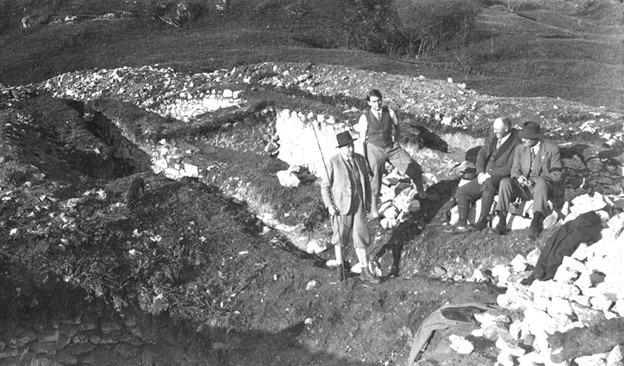
The research team of the Saxon Museum of the Land of Barsa during the archaeological excavations on Muntele Tâmpa (1933)
Fortunately, there are several sites with existing records that offer the visitor a glimpse into ancient Dacian architecture. One such place is Ruinele Cetății Brassovia, located NE of Solomon’s Rocks on Muntele Tâmpa, overlooking the historic district.
While the only remains are of the fortress walls, nearly overgrown with vines and weeds, you can observe the crude sizes of individual boulders and compare them to medieval structures, and Roman/Greek ruins.
If you believe Ruinele Cetății should leave you underwhelmed, an extended hike from Somonon’s Rock to Muntele Tâmpa that includes the complete hillside experience will permit you to pass by without adding any time to your trip.
Locating the information on these ancient Dacian fortresses has led me down a rocky and claustrophobic rabbit trail. Perhaps it was the headache I seemed to incur during these sessions, or the minimal resources in German and Hungarian that were starting to overwhelm my now triptic language translation.
Whatever the case may be, I am retracing my red thread back to the surface and marking some notable landmarks in case I should ever pick this topic back up.
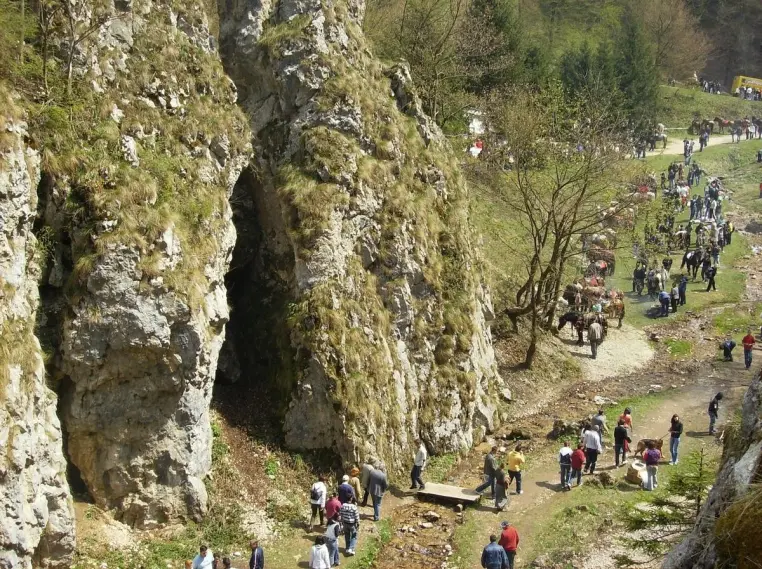
Today, Solomon’s Rocks is a quiet place known only by Romanians. Families will go for a relaxing walk during the fall season, and picnic in the valley for dinner. The few tourists who visit are not prevalent enough to crowd the many hiking trails.
I am fascinated by the complex network of unique history surrounding the valley. How else can you combine a king, abandoned mills, rock climbing, and ancient ruins older than recorded history? Just as Romania sits at the confluence of multiple cultures (Hungarian, Turkish, Roman), stories all over the world become tales told and retold around fires and among taverns.
In the legend, King Solomon is presented in drastic opposites, reflecting light on how the different people groups viewed each other. A Hungarian perspective may show him as a victor of Turkish invasion, chosen by God himself, while the Romanians see him as a usurper, escaping to the hills in a chance to save himself from his failed coup. The latter is more plausible–albeit less dramatic—due to a letter from Pope Gregory VII, rebuking Solomon for failing to submit to the churches authority and abdicate the throne.
“You cannot receive these [favor], or hope to reign long without apostolic reproof unless you correct your fault and acknowledge that the scepter of the kingdom which you hold is a fief of the apostolic and not of the royal majesty.”
The Correspondence of Pope Gregory VII, Book II, 13 || Oct. 28, 1074
Solomon’s Rocks reflect the heart of Humanus Institute as an example of history that can easily be lost to time without the intervention of inspired people and communities to preserve and protect the many stories found here. These rocks DO talk, and each one has a story for you.
Solomon’s Rocks (Pietrele Lui Solomon) – Attractions in Brasov Brasovtour.com. Accessed 17 Feb. 2026.
“S-a Prăbușit Ultimul Zid Din Vechiul Han de La Pietrele Lui Solomon.” Radiobrasovfm.ro. Accessed 17 Feb. 2026.
Ovidiu Vranceanu. “Pietrele Lui Solomon Și-Ar Fi Luat Numele După Un Rege Maghiar Care Și-a Ucis Fratele.” Biz Brasov, 18 June 2021. Accessed 17 Feb. 2026.
Costea, Florea. “Fortificaţia Dacică de La Braşov- Pietrele Lui Solomon (Între Chietri).” Cumidava, vol. XX; anul 1996, 2021, pp. 71–86. Accessed 17 Feb. 2026.
“Cetățile Dacice Din Munții Orăștiei” Cimec.ro, 19 July 2024.
“Cetatea Braşovia – Legenda Braşovului” metropolabrasov.ro, March 2017.
“Cetatea de La Pietrele Lui Solomon (Jud. Brașov) Și Munții Zidiți Ai Dacilor | Ziarul Naţiunea.” Ziarulnatiunea.ro, 2019. Accessed 17 Feb. 2026.
“Traseul Morilor Din Șcheii Brașovului – Pensiunea Pietrele Lui Solomon.” Pietreleluisolomon.ro, 16 Jan. 2017. Accessed 17 Feb. 2026.
“Cartierul Meu, Casa Mea – IDENTITATEA VECINĂTĂȚII” asoidc.ro, 2002.
Signpost of Cartierul Schei (GoogleMaps)