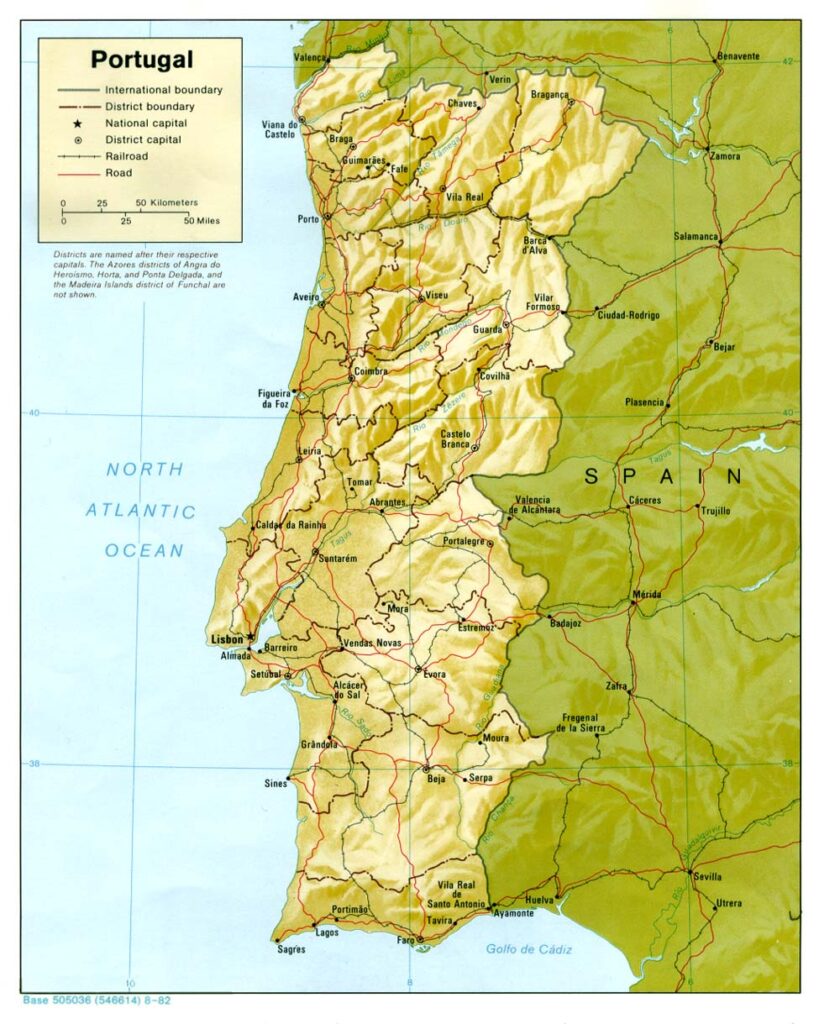
By gl:User:Satxa (Wikipedia)
Before I began my research on the country of Portugal, and prior to the publication of my Portuguese articles here on Humanus Institute, the only fact I knew about the country was its record for the oldest unchanged international border with Spain. I’ve travelled to Lisboa for my honeymoon a few years ago, and enjoyed the costal architecture, churches, and cuisine. But I didn’t understand what it means to be a Portuguese. So, join me as we discover the many places of history and culture that define Europe’s westernmost country.
My journey through Portugal to understand these demarcations of international boundaries does not begin anywhere near Spain; instead, we establish the start of our adventure at Guimarães Castle, located in a place nicknamed Cidade Berço, “the cradle city.”
Before Portugal was a country, we find ourselves in the Portucalense Provence under the domain of the Kingdom of León, a precursor to present day Spain. Within this kingdom is a small village called Vimaranes, situated between the foothills of the mountain ranges trailing eastward into the Iberian Peninsula, and the coastal plain sinking west into the Atlantic Ocean.
In the 10th century A.D., this village caught the attention of Countess Mumadona Dias (the aunt of King Ramiro II), who—having grown up here—decided to construct the Collegiate Church of Nossa Senhora da Oliveira, a monastery for both monks and nuns. Due to its proximity to established trade routes, Guimarães Castle was built around a decade later (~960 A.D.) to defend the now growing village.
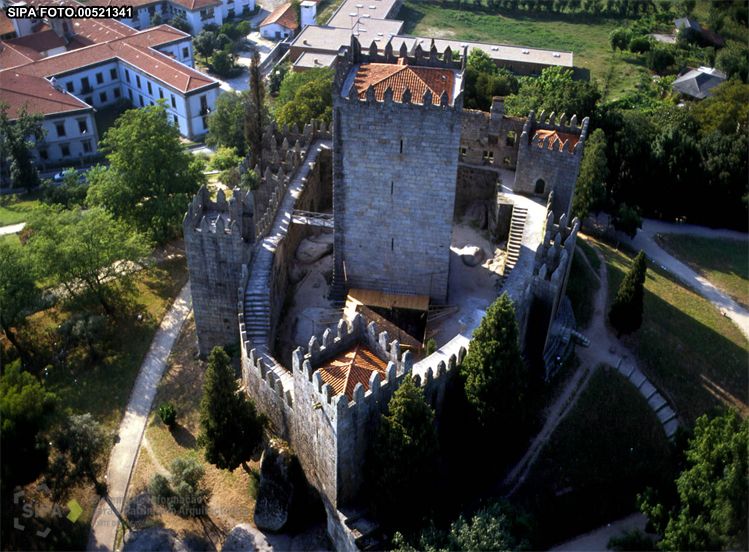
Located atop a granite outcropping, the initial castle walls were believed to be made entirely of wood. Whether by attacking forces or structural expansion, no evidence remains of the original material. During the next few centuries, the castle undergoes several modifications and expansions, maintaining the distinctive form of a medieval shield.
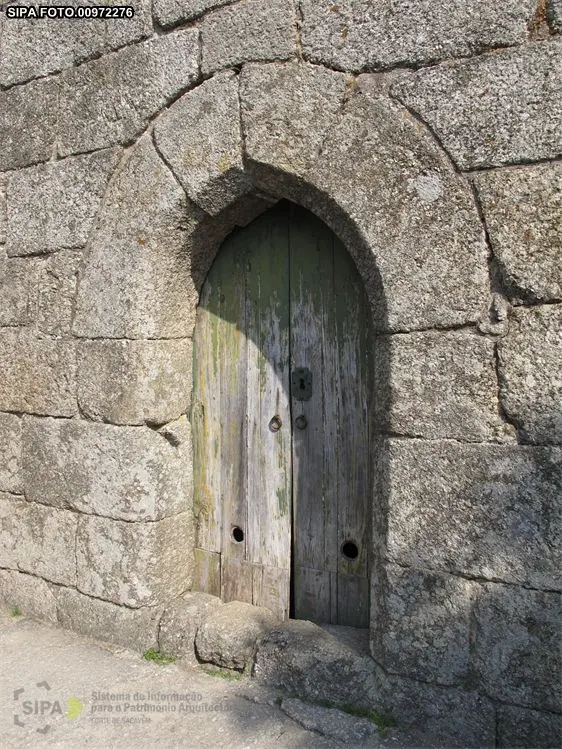
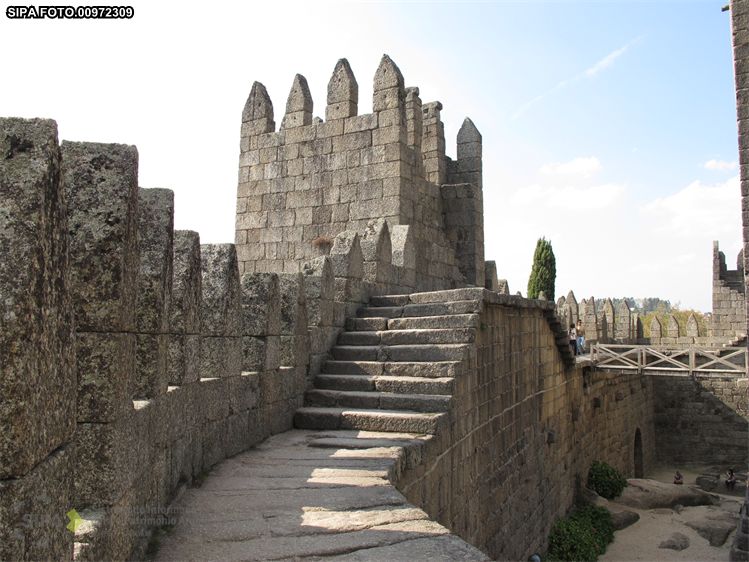
The earliest remains date to the 12th century, demonstrating the shift to Romanesque design described by:
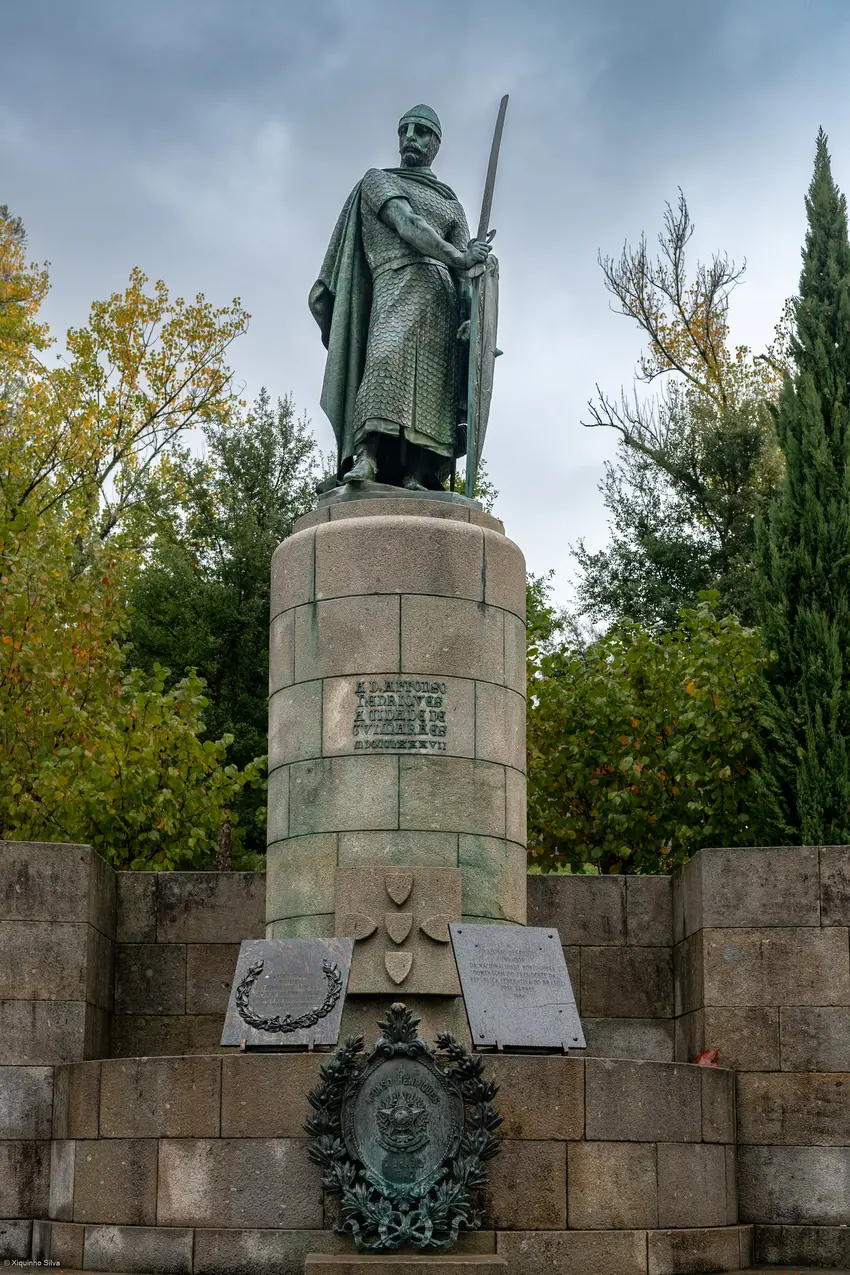
During this period in 1111, Dom Afonso Henriques, the first king of Portugal was born in the castle. Afonso would later lead his Provence to independence from León in 1128 at the Battle of São Mamede, claimed to be held outside the castle walls. 50 years later, Afonso achieved international recognition for his new Kingdom of Portugal by Pope Alexander III of Rome.
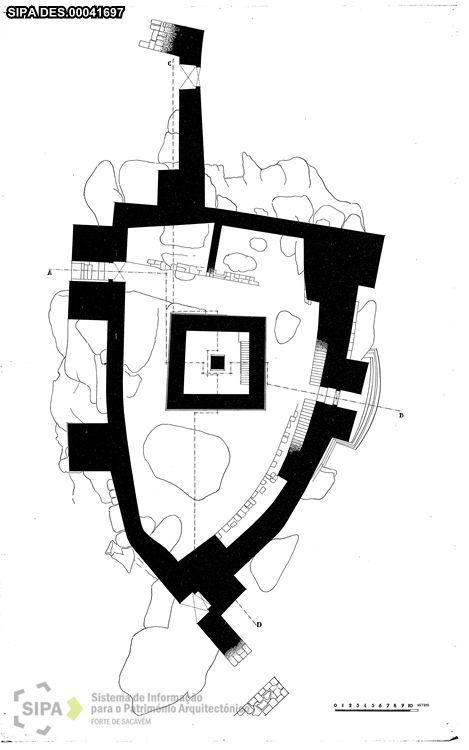
In the 13th Century, extensive upgrades were made to the castle, resulting in its present-day layout. During this period, Vimaranes—now a bustling city called Guimaraes—was simultaneously constructing a border wall. Due to its geographic location, the builders had a rich supply of granite to use for this large-scale project, and since the castle sat near the city’s boundary, the battlements were incorporated into the defensive perimeter. In addition, a series of turrets and a large central keep (donjon) were added in the Gothic style.
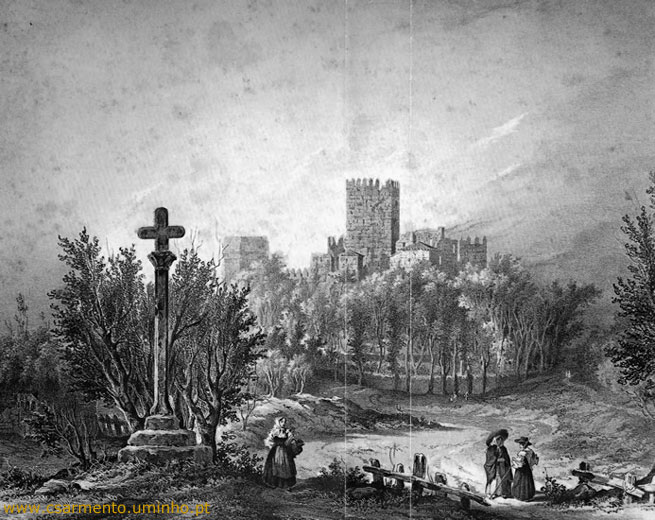
Over the next couple of centuries, the boundaries of empires shifted westward to the present-day border of Portugal, and with the inclusion of more powerful weaponry such as cannons and explosives, Guimarães Castle was no longer used as a defensive position. Its relevancy declined and neglect became prevalent with moss covered stones and growing cracks in the walls.
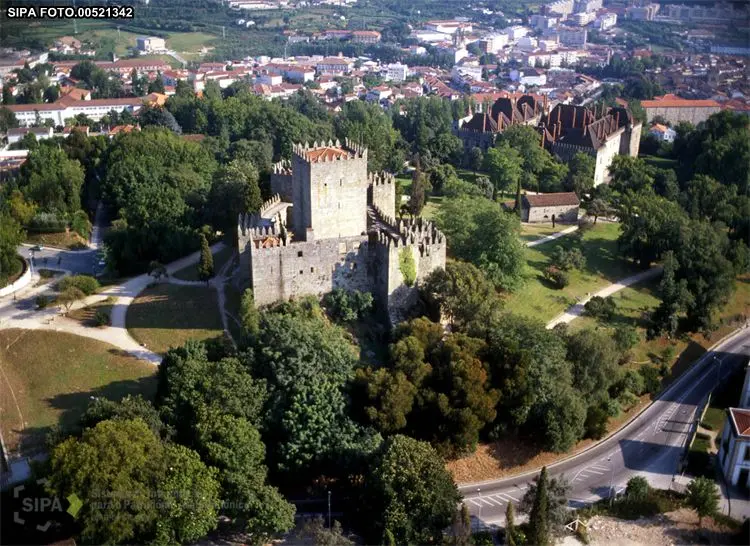
Beginning in the 16th century, it was converted to a prison for the next 200 years, and the care and attention necessary for proper maintenance became absent. Under newfound appreciation from successive generations, the Castle was classified as a national monument in 1881, and restoration attempts were made through the early 1900’s.
Understanding the boundaries of countries past and present reveal stories of ancient empires, conflicts between warring factions, and bastions of peace. Humanus Institute seeks to understand how these castles—in what appear to be random, insignificant places on a map—can hold a wealth of kingdom-building lore. Within each city, village, and community holds meaning and value alongside the grand scheme of life, waiting to inspire each one of us.